On this page
The main parts of an engine
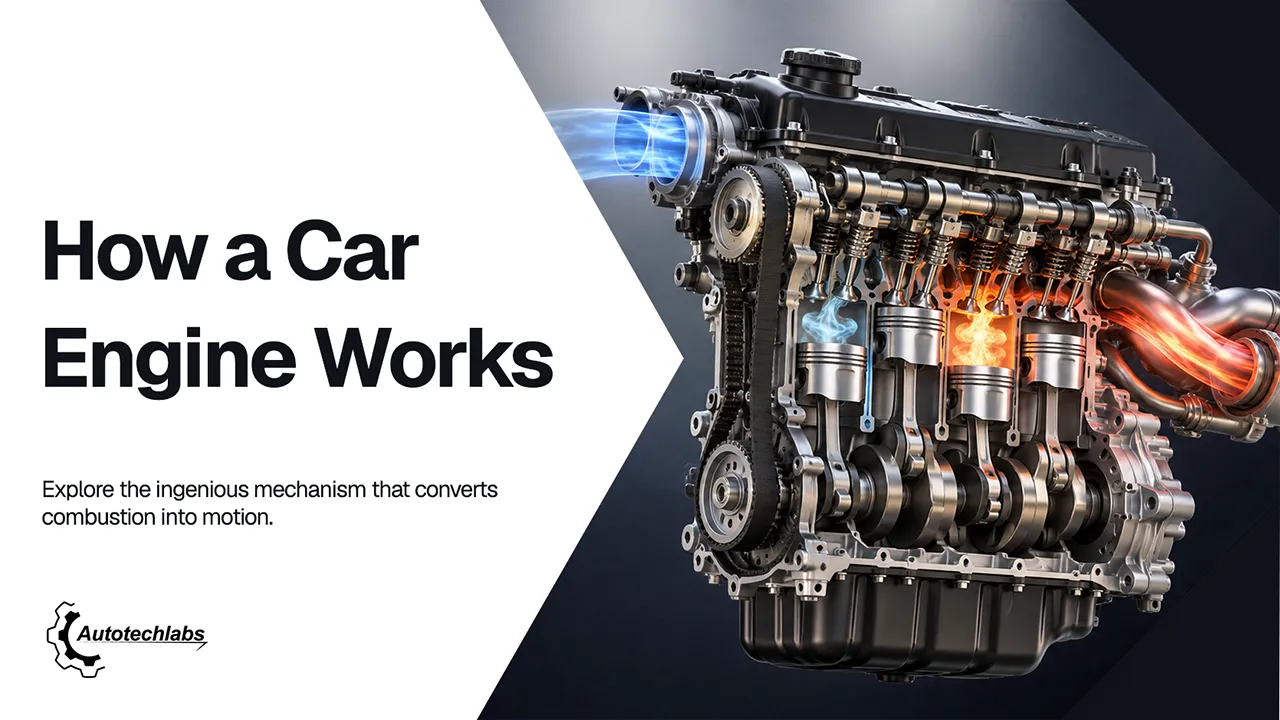
A typical four-stroke gasoline engine burns a mixture of fuel and air inside its cylinders. This is called internal combustion. The engine turns the pressure produced by combustion into the rotation that can drive a vehicle.
Inside each cylinder, a piston moves up and down. A connecting rod links the piston to the crankshaft, which changes that up-and-down motion into rotation. The crankshaft sends this rotation through the vehicle's powertrain.
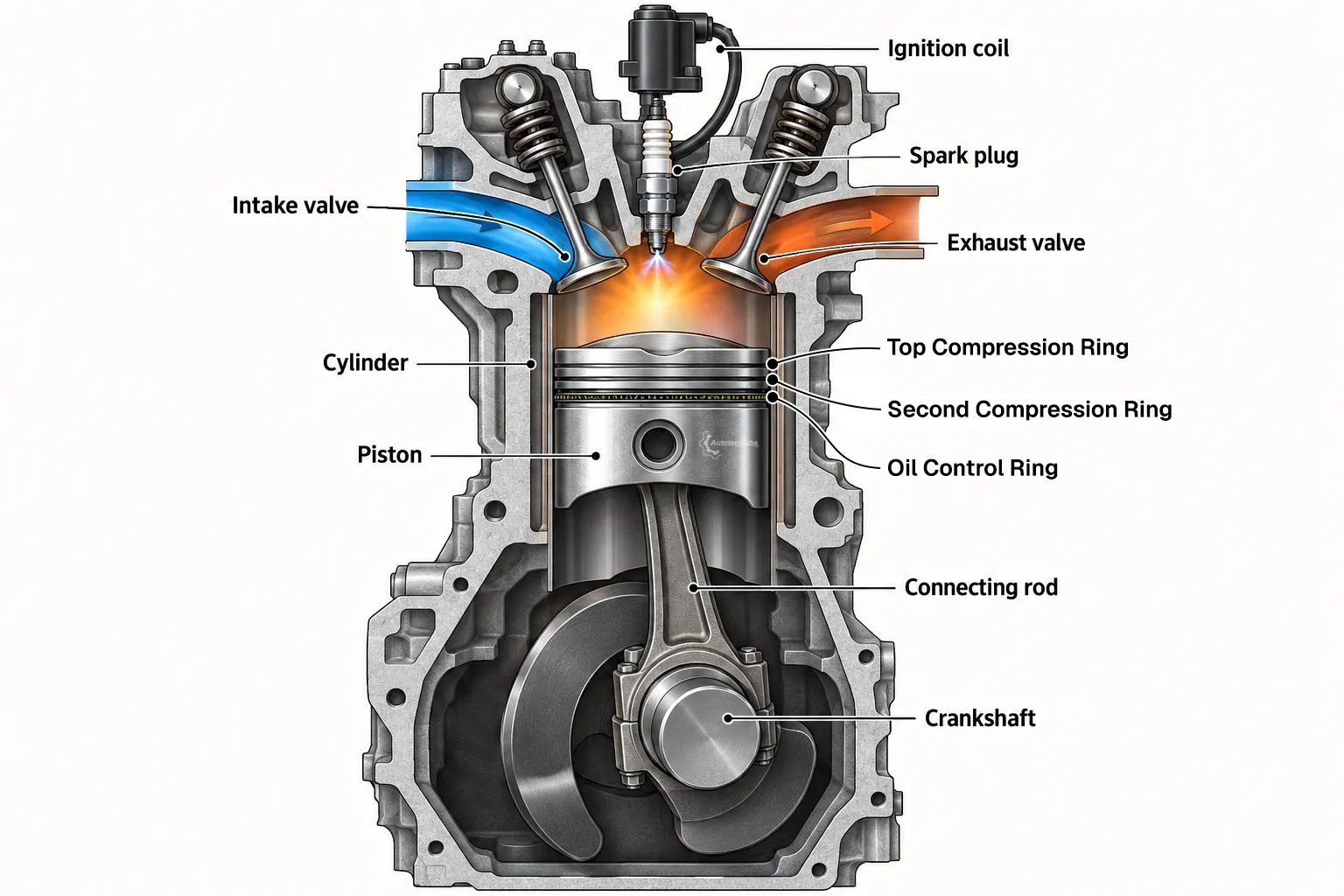
- Simplified single-cylinder engine cutaway -
Valves in the cylinder head control the flow of gases. The intake valve lets the fresh charge into the cylinder, while the exhaust valve lets burned gases leave. One or more camshafts open and close the valves at the right points in the cycle. In a four-stroke engine, the camshaft turns once for every two crankshaft revolutions. A timing belt, chain, or another drive system keeps their motion synchronized, depending on the engine design.
The four-stroke cycle
Each cylinder completes four piston strokes over two turns of the crankshaft. The strokes are intake, compression, power, and exhaust. This example describes a spark-ignition gasoline engine; other engine types handle fuel and ignition differently.
1. Intake
The intake valve opens as the piston moves down. The cylinder draws in air, and the engine's fuel system supplies gasoline so the two can burn together. The way fuel is added depends on the engine:
- Carburetor: Air flowing through the carburetor draws in and mixes with fuel before the mixture reaches the cylinders. Carburetors are used in older designs and some small engines.
- Single-point fuel injection (SPFI): One injector, usually near the throttle body, supplies fuel for multiple cylinders. This is also called single-point or throttle-body injection.
- Multi-point fuel injection (MPFI): Each cylinder has an injector in its intake port, near the intake valve. Fuel mixes with air before entering the cylinder.
- Gasoline direct injection (GDI): Each cylinder receives fuel from an injector that sprays directly into the combustion chamber. The air enters separately through the intake system.
These systems meter fuel in different places, but their purpose is the same: provide the amount of fuel needed for the engine's operating conditions. The engine's controls coordinate fuel delivery with airflow and ignition.
2. Compression
The valves close and the piston moves up, compressing the charge in the cylinder. In a typical port-injected gasoline engine, that charge is already a mixture of air and fuel; in a GDI engine, fuel may be injected into the cylinder during the compression stroke. Near the end of compression, the spark plug ignites the mixture. The exact injection and spark timing depend on engine design and operating conditions.
3. Power
Combustion rapidly raises the pressure inside the cylinder. The expanding gases push the piston down, transferring force through the connecting rod to the crankshaft. This is the stroke that adds energy to the crankshaft.
4. Exhaust
The exhaust valve opens and the piston moves up again, pushing most of the burned gases out of the cylinder. The cycle can then begin again.
How the engine keeps turning
A single cylinder produces power for only one of its four strokes. Engines with multiple cylinders stagger their power strokes so the crankshaft receives repeated pushes as it rotates. The flywheel's rotational inertia helps carry the crankshaft through the strokes between those pushes. Crankshaft counterweights serve a different purpose: they help balance moving engine parts and reduce vibration.
Many car engines have multiple cylinders arranged in different layouts. The narration's inline-four, double-overhead-camshaft engine is one example, not a description of every car engine. Cylinder count, valve arrangement, fuel delivery, and timing-drive design vary.
This overview focuses on a gasoline engine that uses a spark plug. A diesel engine typically draws air into the cylinder, compresses it until it becomes hot, and then injects fuel, which ignites in that hot air. The basic parts may look similar, but the combustion process differs.
What the spark plug does
The spark plug creates a small electrical arc across the gap between its electrodes. That spark starts combustion of the compressed air-fuel mixture at a controlled point in the cycle. The plug itself does not generate the high voltage: the ignition coil raises the vehicle's low-voltage electrical supply to the much higher voltage needed for a spark. Depending on the design, an engine may use a coil for multiple plugs or a separate coil mounted on each plug.
Why pistons have rings
Piston rings sit in grooves around the piston and seal the small gap between the piston and cylinder wall. Compression rings help keep the high-pressure gases above the piston during compression and combustion, limiting gas leakage into the crankcase. Rings also transfer heat from the piston to the cylinder wall.
The oil-control ring manages the thin film of lubricating oil on the cylinder wall. It scrapes away excess oil and allows it to drain back into the engine, while leaving enough lubrication for the piston to move. Ring arrangements vary by engine, and many designs use more than one compression or scraper ring alongside an oil-control ring.