On this page
How the cooling system works
An internal combustion engine produces heat as it runs. Its cooling system carries some of that heat away while helping the engine reach and stay within its designed operating temperature range. In a liquid-cooled engine, a pump circulates coolant through passages in the engine and cylinder head, then through the radiator, where heat transfers to the surrounding air. Some smaller engines are air-cooled instead: air flowing over fins on the engine carries heat away.
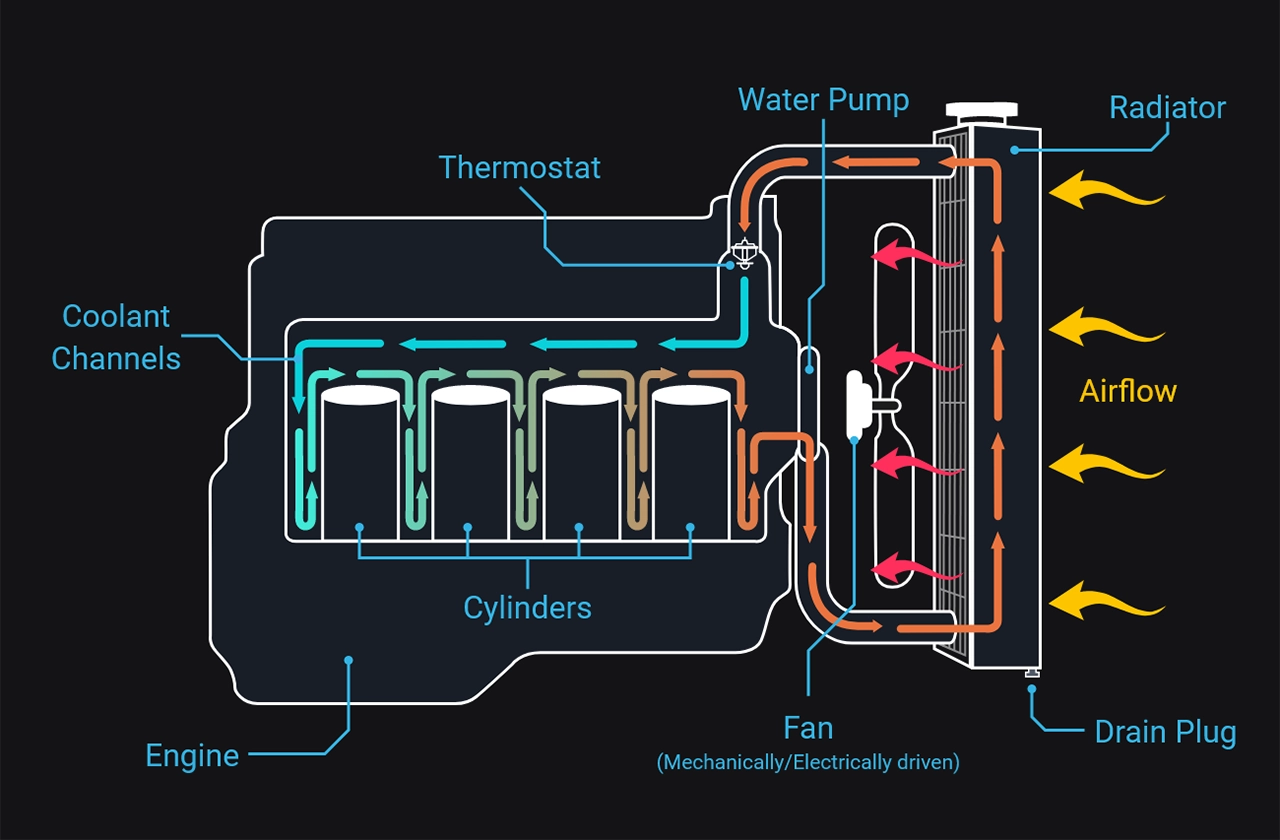
- Typical Cooling System Layout -
The diagram shows a typical liquid-cooled layout; exact routing and components vary by vehicle. Coolant circulates while the engine runs, but the thermostat changes how much flows through the radiator. This helps the engine warm up and then regulates its temperature. Many systems also route coolant through a bypass when the thermostat is closed.
- After a cold start, the thermostat is generally closed to restrict flow through the radiator. Coolant continues to circulate through the engine and, in many designs, a bypass circuit, helping the engine warm up.
- As coolant temperature rises, the thermostat opens progressively and allows more coolant to pass through the radiator. The temperature at which it begins to open depends on the vehicle and thermostat specification.
- Air moving through the radiator carries heat away. This airflow comes from the vehicle's motion and, when needed, a cooling fan. The fan is especially useful at low speeds or while idling; it is not the only way the radiator releases heat.
The cooled coolant then returns to the engine and absorbs more heat. This continuous circulation transfers heat from the engine to the air. The thermostat and fan help regulate temperature, but the exact controls differ across vehicles.
Thermostat vs ECT Sensor
The thermostat is a temperature-responsive valve that regulates coolant flow to the radiator. In a typical layout, it restricts radiator flow while the engine is cold and opens progressively as coolant warms. Some designs also control a bypass passage. The thermostat is different from the engine coolant temperature (ECT) sensor: the thermostat regulates flow, while the sensor measures coolant temperature and sends a signal to the engine control system. Depending on the vehicle, that system may use the reading to control the radiator fan and other functions.
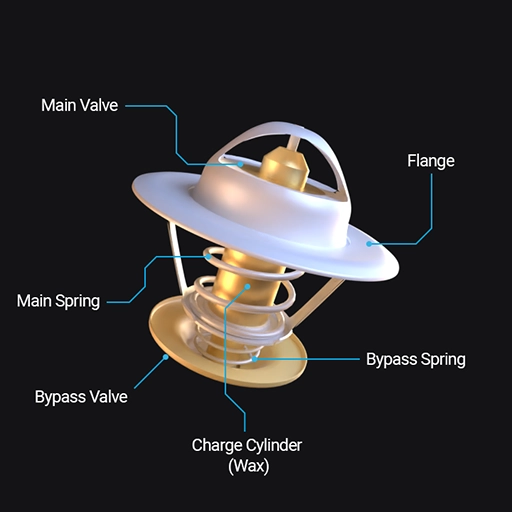
- Thermostat -
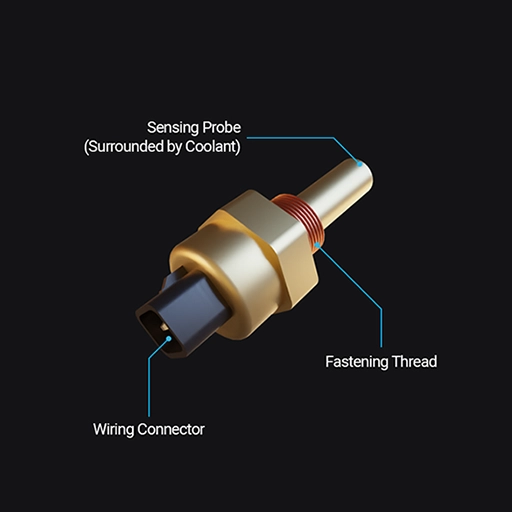
- ECT Sensor -
Antifreeze and coolant
“Antifreeze” usually refers to a glycol-based concentrate, while “coolant” commonly refers to the fluid circulating in the system: antifreeze mixed with water, or a ready-to-use premix. Products and vehicle requirements vary. Use the coolant chemistry and mixture specified in the owner's manual; do not choose a coolant based on color alone.
Why does coolant contain antifreeze?
Water alone does not provide the freeze protection, corrosion protection, or other properties required by most vehicle cooling systems. The specified coolant mixture is designed to protect the system across its intended operating conditions.
Glycol-based antifreeze lowers the coolant's freezing point and raises its boiling point; corrosion inhibitors help protect cooling-system materials. The sealed system's pressure cap raises the boiling point further. These properties depend on the coolant product and mixture, so use the type and concentration specified for the vehicle.
Never remove a radiator or coolant reservoir cap while the system is hot. Pressurized coolant can spray out and cause severe burns.