On this page
A suspension spring supports the vehicle and compresses over bumps, then releases that stored energy as it extends. Without damping, the spring and vehicle body would continue to bounce. A shock absorber, or damper, controls that movement. It helps keep the tires in contact with the road and supports predictable handling.
This overview focuses on a common strut-type, twin-tube damper. Suspension layouts and damper designs vary, so the exact arrangement differs between vehicles.
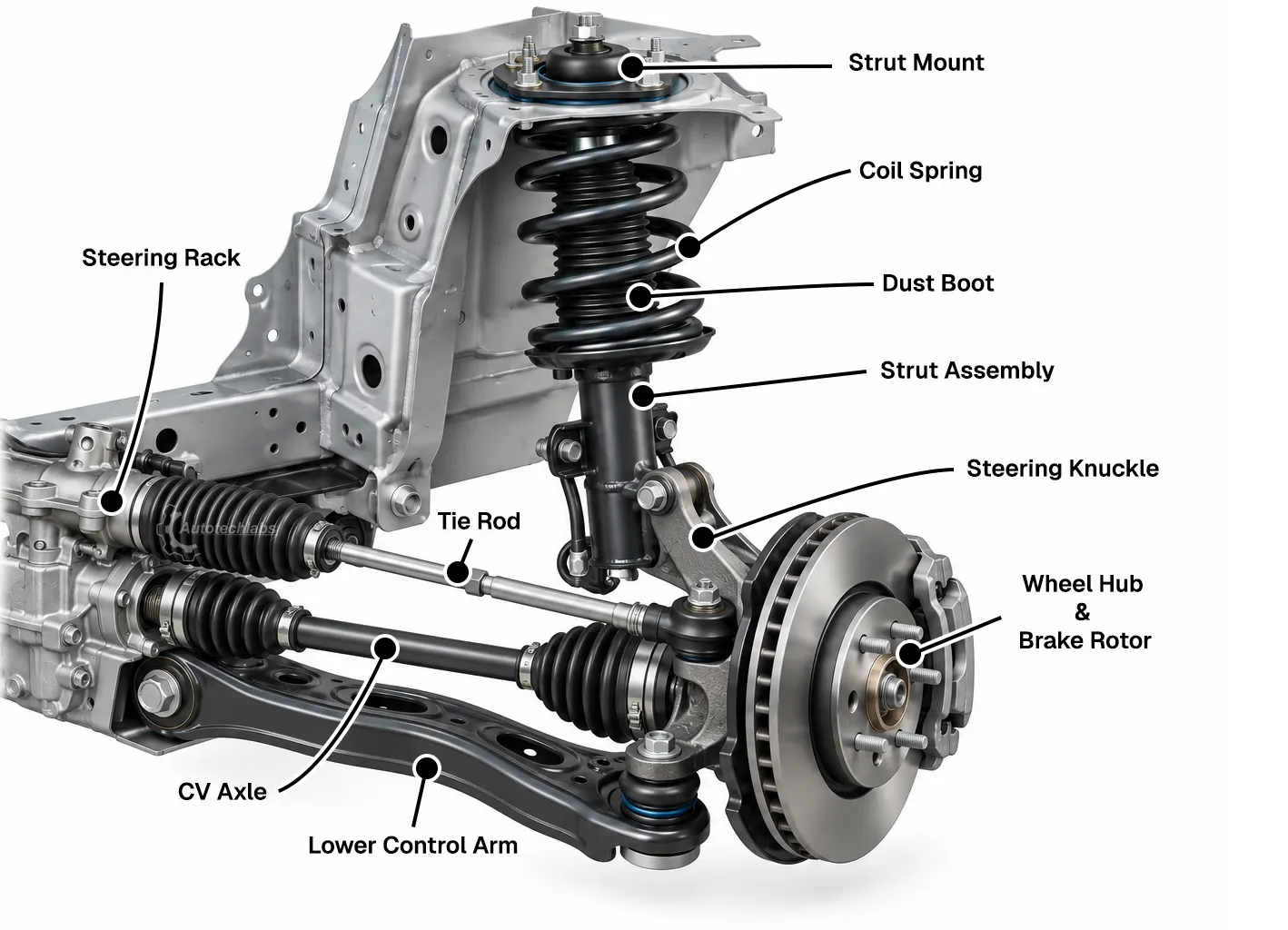
- Front Strut Suspension Assembly -
Strut assembly and its role
A strut is a structural part of the suspension as well as a damper. In a typical front strut layout, the strut connects near the top of the body to the steering knuckle below. The knuckle connects to the lower control arm and turns with the steering system, guiding the wheel through its travel.
A strut assembly commonly includes a damper, a coil spring, an upper mount, and a protective boot over the piston rod. The spring supports the vehicle's weight; the damper controls the spring and suspension movement. The strut housing also helps locate and support the wheel, so a strut is more than a conventional shock absorber by itself.
Inside a twin-tube damper
The damper's piston rod moves a piston through hydraulic fluid inside the working cylinder. Valves in the piston and at the base of the cylinder meter the fluid flow and create resistance. Around the working cylinder is a reserve chamber, also called a compensating chamber. It holds fluid displaced by the piston rod as the damper moves.
The working cylinder needs to remain filled with fluid for the valves to control motion consistently. The reserve chamber provides room for fluid to move in and out as the rod enters or leaves the cylinder. Depending on the design, the reserve chamber also contains air or pressurized gas above the fluid. The gas accommodates volume changes and helps reduce foaming or cavitation, where bubbles form in the hydraulic fluid.
Twin-tube dampers use separate working and reserve chambers. A monotube damper uses a different arrangement, typically separating its oil and gas with a floating piston.
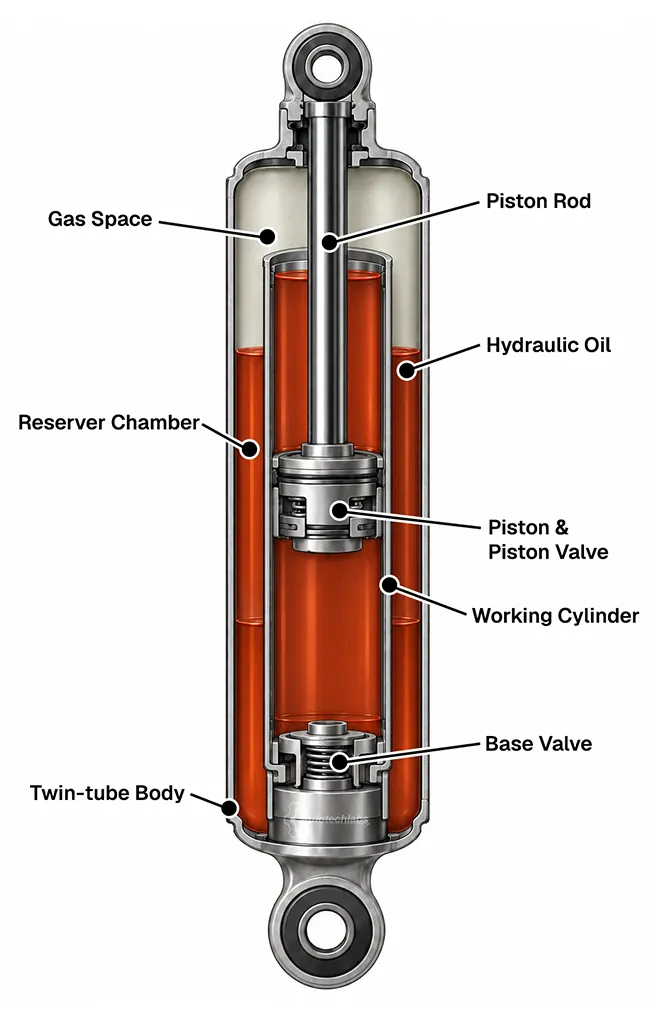
- Twin-Tube Damper Cutaway -
Compression and rebound
As the suspension compresses over a bump, the piston moves toward the base of the working cylinder. Fluid passes through the piston valve, while the volume taken up by the entering rod displaces fluid through the base valve into the reserve chamber. The calibrated valves restrict this flow, slowing the suspension's compression.
As the suspension rebounds and the rod extends, fluid flows back from the reserve chamber to make up the volume left by the rod. The piston valve meters flow through the piston and controls the rebound speed. The resistance during both movements turns some of the suspension's motion energy into heat in the damper fluid and body.
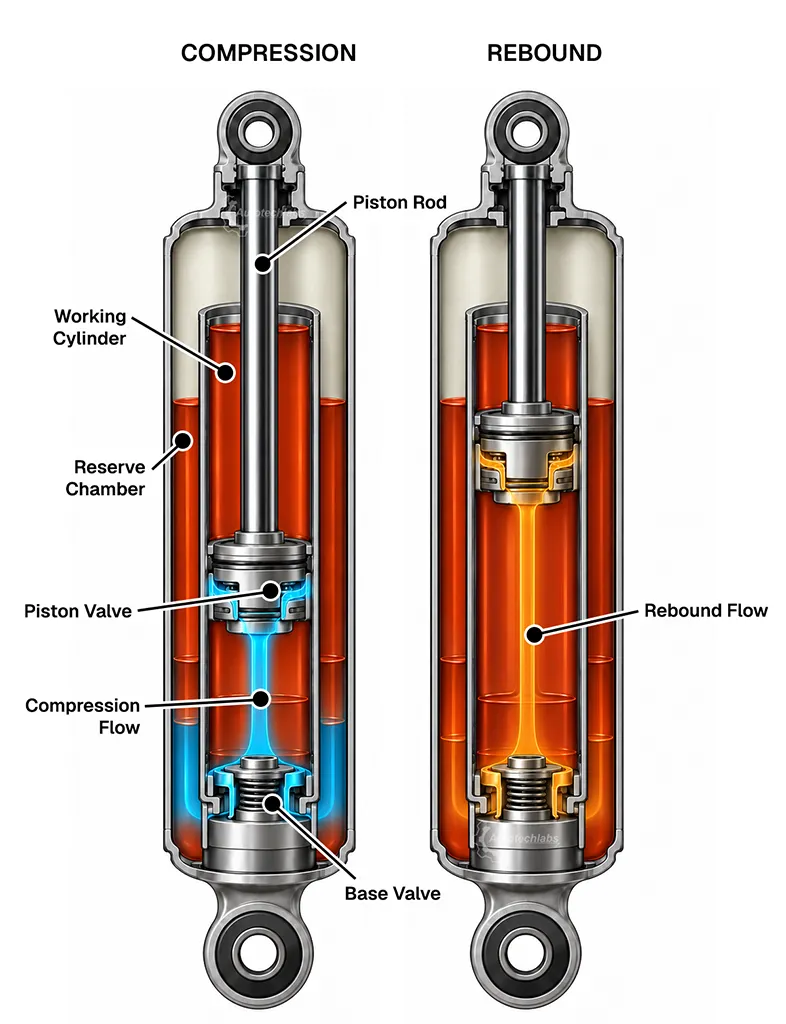
- Compression and Rebound Flow Paths -
By controlling compression and rebound, the damper reduces repeated spring oscillations and helps the vehicle settle after a road disturbance. The spring and damper work together, but their roles are different: the spring supports the load, while the damper controls motion.
Wear and inspection
Dampers and their seals experience repeated movement and can wear over time. A damaged seal may allow fluid to leak, and worn or damaged suspension parts can affect ride and handling. Their condition should be assessed as part of vehicle-specific inspection; replacement requirements and procedures depend on the vehicle. This general explanation is not a diagnosis or repair procedure.