On this page
What a turbocharger does
A turbocharger is a forced-induction device. It uses energy in the engine’s exhaust to drive a compressor, which raises the pressure of the air entering the engine. With more air available, the engine can burn more fuel and produce more power when its fuel and engine controls are calibrated for it.
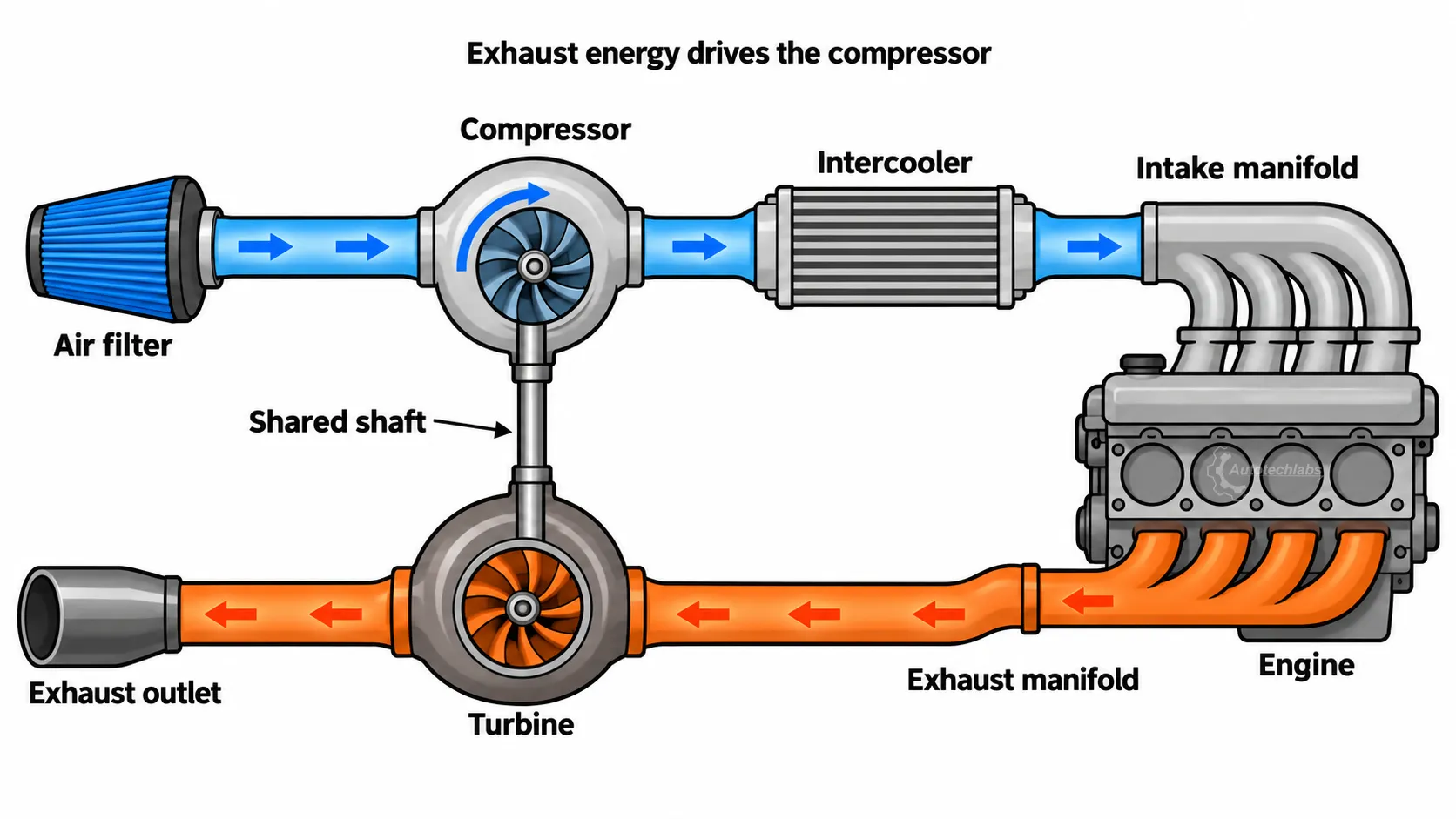
- Typical Turbocharger System Flow -
An engine without a forced-induction device is called naturally aspirated. As a piston moves down on the intake stroke, it draws air through the intake system. A turbocharger adds a compressor to this path, pushing denser air toward the engine.
The main parts
A typical turbocharger has two sides connected by a shared shaft:
- On the turbine side, exhaust gas flows through the turbine housing and spins the turbine wheel.
- On the compressor side, the compressor wheel draws in fresh air and accelerates it outward. The compressor housing slows and directs that airflow, converting much of its velocity into increased pressure.
- The shaft connects the turbine and compressor wheels, so the exhaust-driven turbine spins the compressor.
- The center housing supports the shaft and its bearings. The rotating assembly and center housing are often referred to together as the cartridge or CHRA.
- Engine oil is supplied to lubricate and help cool the bearings. Seals in the center section help manage oil and keep it from entering the air and exhaust paths.
Turbochargers operate at very high rotational speeds; the exact speed depends on the turbocharger and engine operating conditions. Their bearing and lubrication arrangements also vary by design.
How the turbocharger works with the engine
- The engine draws filtered air into its intake system.
- After combustion, exhaust gas leaves the cylinders and flows through the turbine housing, turning the turbine wheel.
- The shaft transfers that rotation to the compressor wheel on the intake side.
- The compressor raises the pressure of incoming air and sends it toward the engine. The engine’s fuel system supplies fuel to match the available air and operating conditions.
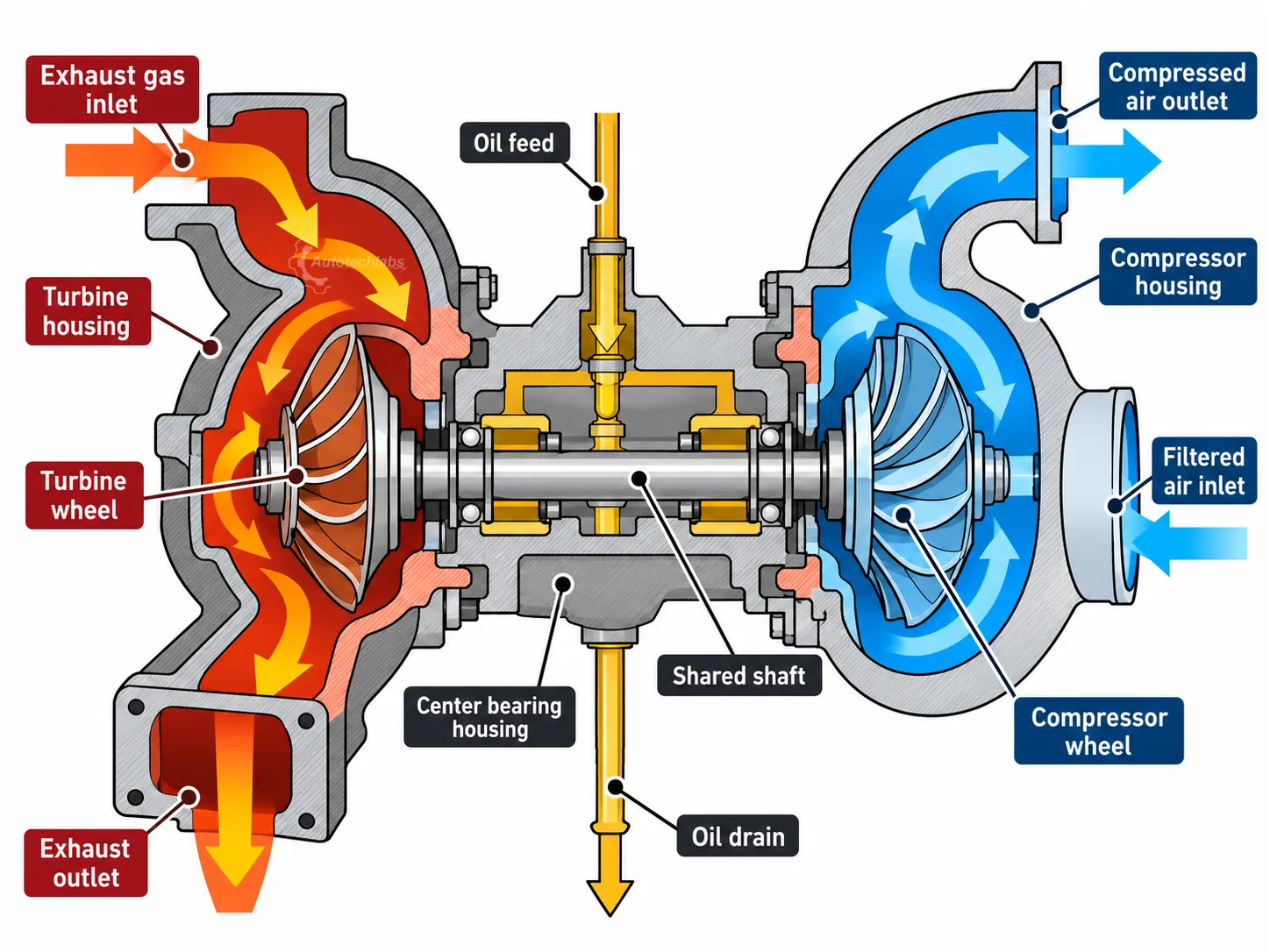
- Turbocharger Cutaway: Turbine, Compressor, Shared Shaft, and Oil Passages -
The turbocharger does not create extra oxygen; it packs more air into the intake charge by compressing it. That lets a suitably calibrated engine burn more fuel in a cylinder cycle and can increase its power output.
Why many systems use an intercooler
Compressing air also raises its temperature. Hotter intake air is less dense than cooler air at the same pressure. Many turbocharged engines therefore route the compressed air through an intercooler, also called a charge-air cooler, before it reaches the engine. The cooler transfers heat from the intake air to the surrounding air or to a liquid cooling circuit, depending on the system.
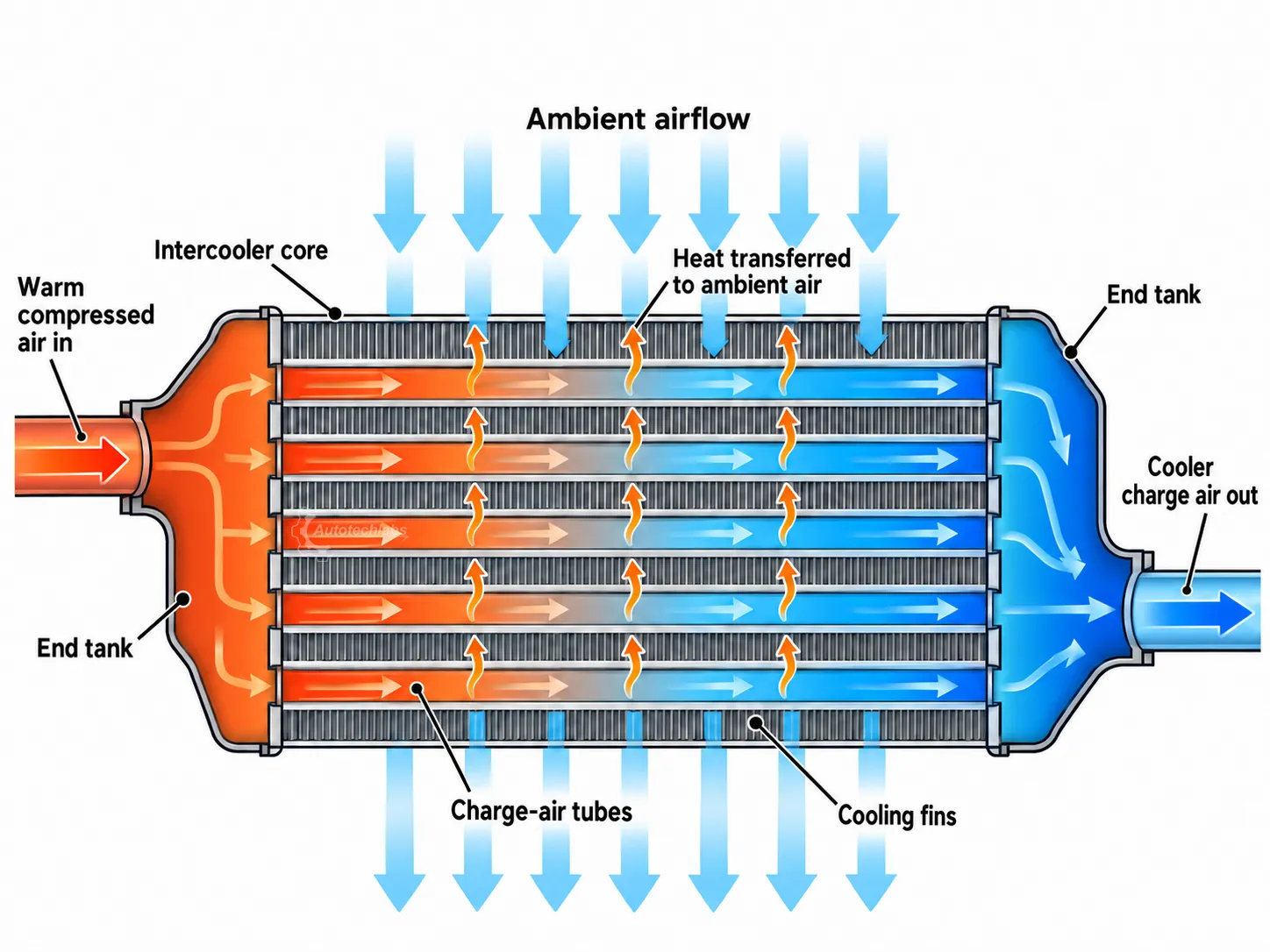
- How an Air-to-Air Intercooler Cools the Charge Air -
Cooling the charge increases its density compared with leaving it hot at the same pressure. In spark-ignition engines, lower charge temperature can also reduce the tendency to knock, though it does not eliminate knock under every condition. Engine design, fuel, boost, and control strategies all matter.
In summary
A turbocharger uses exhaust flow to spin a turbine, which turns a compressor through a shared shaft. The compressor sends higher-pressure air to the engine, and an intercooler may cool that air before it enters the cylinders. With suitable fuel delivery and engine controls, the additional air can support more combustion and power.